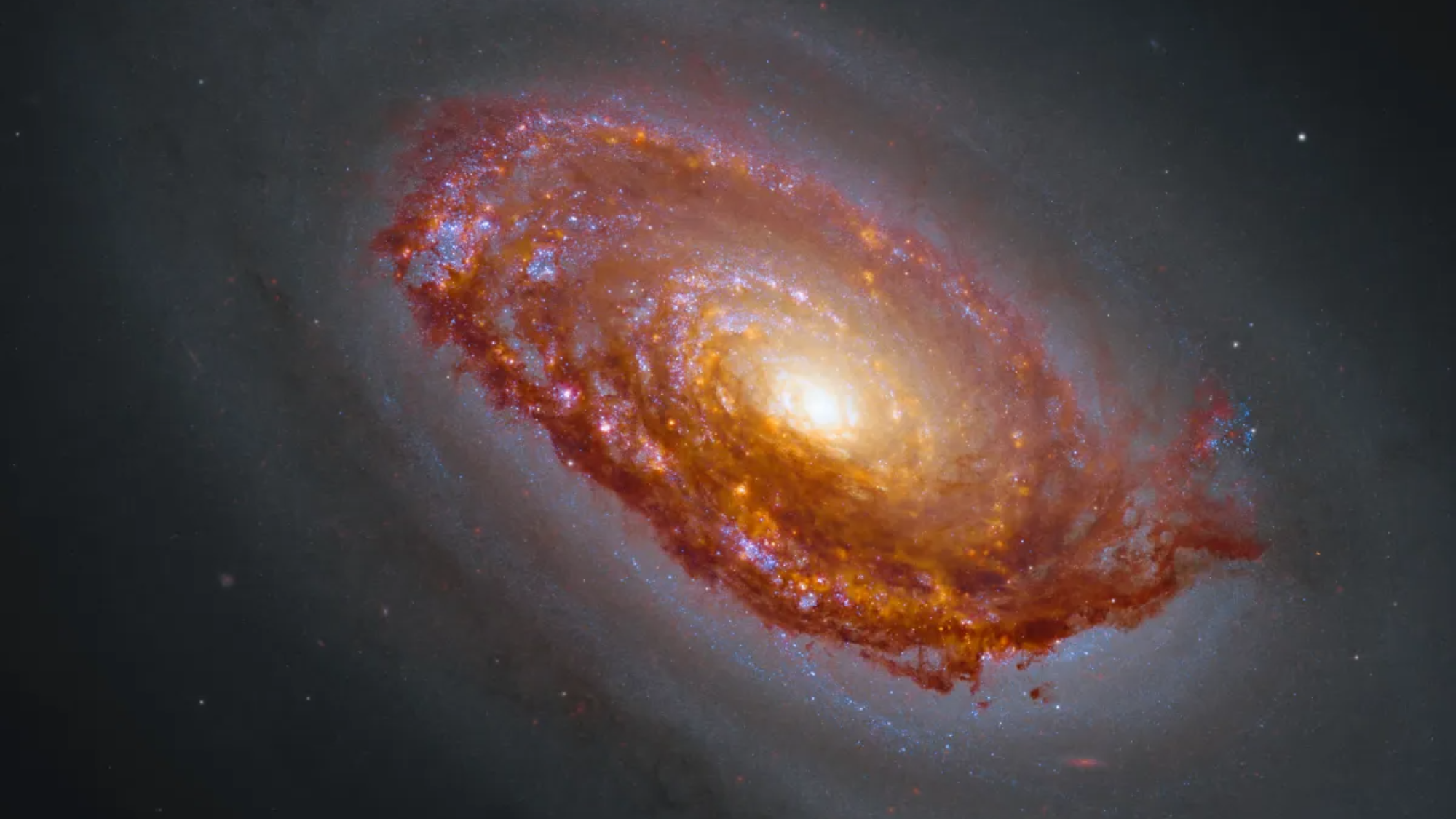
Hubble, Webb Capture Stunning Black Eye Galaxy
New composite image combines Hubble and Webb observations to reveal unprecedented details of the Black Eye Galaxy.
The update
Humanity’s two most powerful space telescopes have joined forces to capture a stunning new composite image of the Black Eye Galaxy (Messier 64). The collaboration combines near and mid-infrared observations from the James Webb Space Telescope with ultraviolet, visible and near-infrared observations from Hubble, revealing unprecedented details of this mysterious spiral galaxy.
Why it matters
This collaborative approach demonstrates how space telescopes don’t replace each other but rather bring complementary capabilities to astronomical observation. The Black Eye Galaxy is particularly interesting because its outer gas rotates in the opposite direction to the gas and stars closer to its center, creating an unusual motion pattern that scientists are eager to study.
What to watch
As NASA prepares to launch the Nancy Grace Roman Space Telescope, this collaborative effort sets a precedent for how multiple observatories will work together to advance our understanding of the universe. Scientists will continue analyzing this data to learn more about galaxy formation processes and the unique dynamics of the Black Eye Galaxy.
Sources
- space.com — Details about the composite image and galaxy characteristics
- space.com — Details about the composite image and galaxy characteristics
- livescience.com — Context on black hole discoveries and telescope capabilities