
US and Iran Trade Strikes as Strait of Hormuz Crisis Escalates, Threatening Global Oil Supplies
The US and Iran exchanged a new wave of military strikes as the crisis over the Strait of Hormuz escalated, with Trump declaring the US would impose a 20% cargo toll and Iran attacking American bases across four Gulf states.
The United States and Iran have exchanged a devastating new wave of military strikes, as the dispute over control of the strategically vital Strait of Hormuz threatens to derail efforts to end their four-month conflict and sends shockwaves through global energy markets.
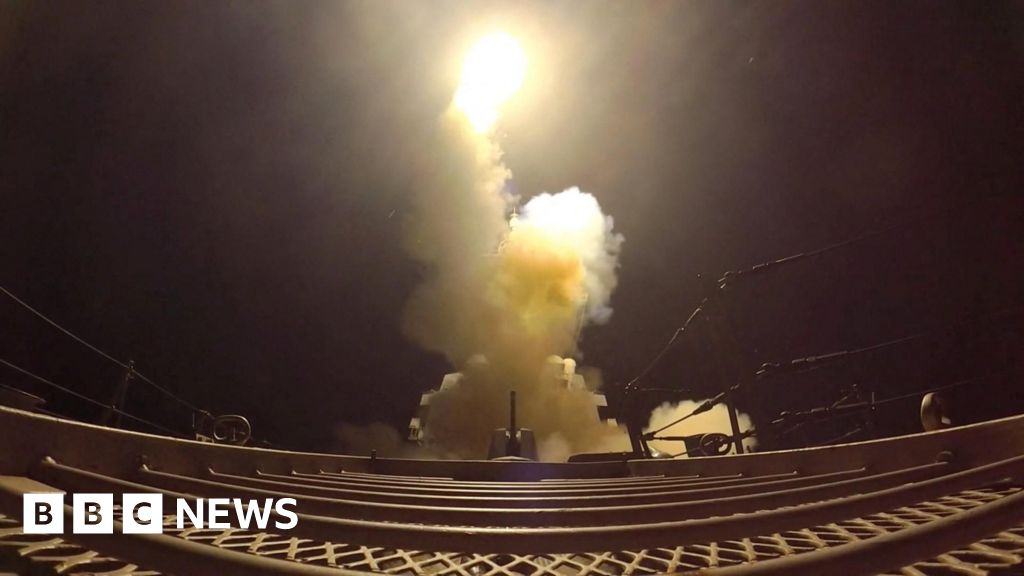
US Central Command said it hit dozens of targets across Iran on Sunday night, deploying fighter jets, naval vessels, and one-way attack aerial and sea drones for the first time. The strikes targeted Iranian air-defence systems, coastal radar sites, and missile and drone capabilities in what CENTCOM described as an effort to degrade Iran’s ability to continue attacking commercial shipping in the crucial Gulf waterway.
Iran Retaliates Across the Gulf
Iran’s Islamic Revolutionary Guard Corps (IRGC) responded with a sweeping wave of retaliatory strikes targeting US military installations across the Middle East. The IRGC said it attacked fuel tanks and ammunition dumps at Prince Hassan Air Base in Jordan, a drone command-and-control centre and radar systems in Bahrain, a surface-to-surface missile base in Kuwait — where it claimed to have destroyed two HIMARS launchers — and radar systems in Oman.

Jordan’s military said it intercepted four missiles that entered its airspace from Iranian territory, with no casualties reported. Kuwait’s air defence systems engaged hostile aerial targets, and Bahrain’s military said it intercepted and destroyed several Iranian aerial attacks. Oman reported that its radar systems were targeted and destroyed by Iranian forces.
Iranian state media reported that at least four people were killed in the US strikes, including a worker at a water pumping station in Mahshahr, Khuzestan province, and a telecommunications company worker in Hormozgan province. Two additional deaths were reported in the border city of Abadan, and fresh explosions were heard in Qeshm and Bandar Abbas on Monday afternoon.
Trump Declares US ‘Guardian’ of Strait, Imposes 20% Cargo Toll
In a dramatic escalation of rhetoric, President Donald Trump declared that the United States would take control of the Strait of Hormuz and impose a 20% toll on all cargo passing through the waterway. Writing on Truth Social, Trump proclaimed that the US would from this point forward be known as ‘THE GUARDIAN OF THE HORMUZ STRAIT’ and would be reimbursed for costs of providing safety and security.
Trump also announced the immediate reinstatement of the US naval blockade of Iranian ships and vessels using Iranian ports, while insisting that all other countries would have ‘fair and open use of the Strait.’ In an interview with Fox News, Trump said the US was hitting Iran ‘very hard’ because it had broken the deal on the Strait of Hormuz.
Oil Markets React as Shipping Grinds to Halt
The escalation has sent immediate shockwaves through global energy markets, with Brent crude oil prices jumping more than 3% on Monday. The Strait of Hormuz normally handles approximately 20% of global oil and gas shipments, making it one of the world’s most critical chokepoints for energy supply.
Shipping data from trade intelligence firm Kpler revealed that only six vessels transited the strait on Sunday — the lowest number in five weeks. Those that did pass included the Humanity carrying 2 million barrels of Iranian oil and the Capetan Andreas transporting 500,000 barrels of Kuwaiti petroleum products. Three empty tankers also entered the Gulf to load oil.
Peace Deal in ‘Crisis’
Iran’s foreign ministry said the US attacks were ‘rendering futile’ all efforts to reduce tensions, accusing Washington of causing the return of insecurity in the Strait of Hormuz and disrupting international commercial shipping. Iran’s foreign ministry spokesman Esmail Baqai said Tehran was trying to agree on a joint mechanism with Oman to manage traffic through the strait, but that pressure on Muscat from Washington was impeding progress.
The IRGC declared that Iran would ‘continue to exercise sovereignty over and management of the Strait of Hormuz,’ directly contradicting the American position. The crisis casts serious doubt over the preliminary agreement that the US and Iran signed in June to end their four-month conflict and reopen the strait. Iran now says that deal is in a state of ‘crisis.’
Key Takeaways
- The US launched strikes on dozens of Iranian targets, including air-defence systems and coastal radar sites, using drones and naval vessels for the first time
- Iran’s IRGC retaliated with attacks on US military facilities in Kuwait, Jordan, Bahrain, and Oman
- Trump declared the US the ‘Guardian of the Hormuz Strait’ and imposed a 20% cargo toll on all shipping
- Brent crude oil surged more than 3% as only six vessels transited the strait on Sunday
- The June ceasefire agreement is now described by Iran as being in a state of ‘crisis’
What to Watch Next
The coming days will be critical. Watch for formal responses from Gulf states whose territory was struck, potential emergency sessions at the United Nations Security Council, and further movements in oil prices as markets assess the risk of prolonged disruption. Any resumption of Iran-backed Houthi attacks on Red Sea shipping would compound the crisis. The viability of the June memorandum of understanding now hangs by a thread, and neither side appears willing to de-escalate without significant concessions from the other.