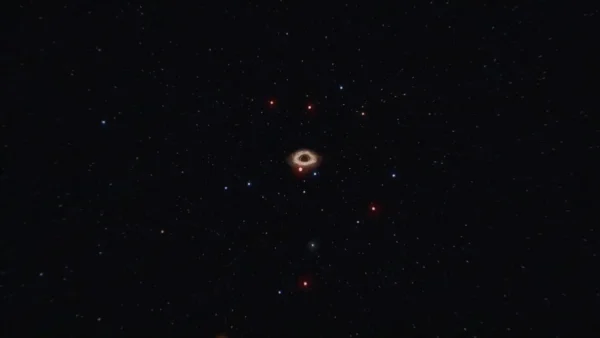
NASA Swift Telescope Doomed After Rescue Fails
A $30 million private rescue mission failed, and NASA's Swift telescope is now doomed to crash back to Earth.

The Update
NASA has officially called off efforts to save its Swift Observatory after a private rescue spacecraft encountered critical problems in orbit. The spacecraft, named LINK and built by Katalyst Space, launched on July 3 with the goal of boosting the telescope’s altitude. However, LINK began spinning uncontrollably weeks after launch. NASA announced on August 19 that the rescue mission would not continue as planned, leaving the Swift Observatory on a path to crash down to Earth later this year.
Why It Matters
The Swift Observatory, launched in 2004, is a critical tool for detecting gamma-ray bursts, the most powerful explosions in the universe. The telescope’s orbit has been slowly decaying due to atmospheric drag. A successful rescue would have extended the mission’s life and preserved its scientific output. The failure of the $30 million rescue mission highlights the technical challenges of servicing aging satellites and raises questions about the reliability of private sector solutions for government assets.
What to Watch
Observers should monitor the timeline for Swift’s atmospheric reentry. While the sources predict a crash later this year, the exact date remains uncertain. LINK will still attempt a rendezvous with Swift to practice proximity operations and demonstrate its capabilities other than spacecraft capture.
Sources
- livescience.com — Mission timeline, failure announcement, and context on the telescope's purpose.
- space.com — Details on the LINK spacecraft, launch vehicle, and the $30 million contract context.