
Mars Reveals Honeycomb Patterns
Curiosity captures vast expanse of mysterious polygonal patterns that could reveal Mars' watery past
The Update
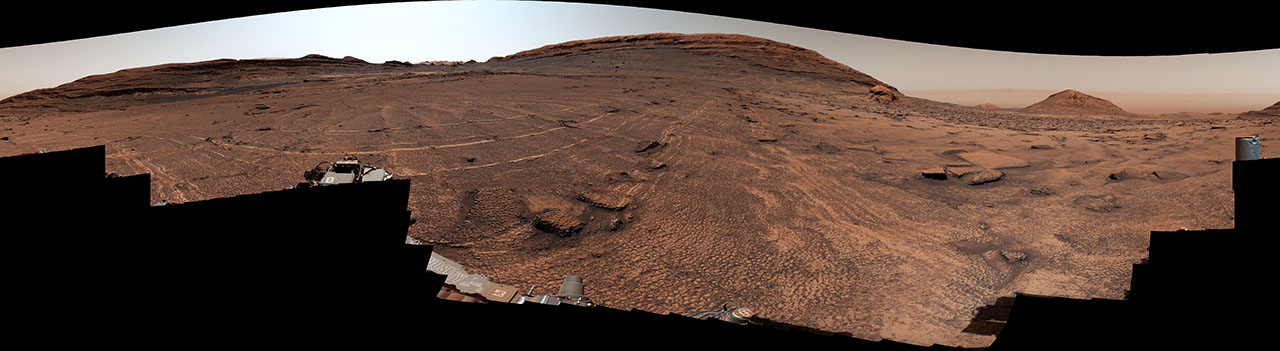
NASA’s Curiosity rover has captured a 360-degree view of an expansive Martian terrain covered in polygonal surface features. The rover found these geometric shapes on June 19-20, 2026, during its climb up a valley nicknamed ‘Valle Grande.’ The polygons, ranging from approximately 1.5 to 3 inches across, spread across the surface as far as the rover can see, wrapping around a nearby butte nicknamed ‘Miraflores.’
Why It Matters
This discovery represents the largest concentration of polygonal features ever found on Mars. These patterns, which resemble honeycomb textures, form through various geological processes including surface drying, temperature cycles, and soil compaction. Their unprecedented scale on Mars could provide new insights into the planet’s ancient climate, potential water history, and environmental conditions that might have supported microbial life in the past.
What to Watch
Scientists will analyze these polygons to determine their formation mechanism and what they reveal about Mars’ geological evolution. Researchers will compare these Martian features to similar patterns on Earth to better understand the environmental conditions that created them. The discovery may also influence future rover missions targeting areas with similar polygonal terrains.
Sources
- science.nasa.gov — Details about the polygonal features and their characteristics
- nasa.gov — Information about the rover's location and mission context
How did this story land?
Choose one reaction. Choosing it again leaves it selected.