
Dark Matter Signal Detected?
Scientists detect potential dark matter particle in South Dakota experiment, but caution more data needed before confirmation.
The update
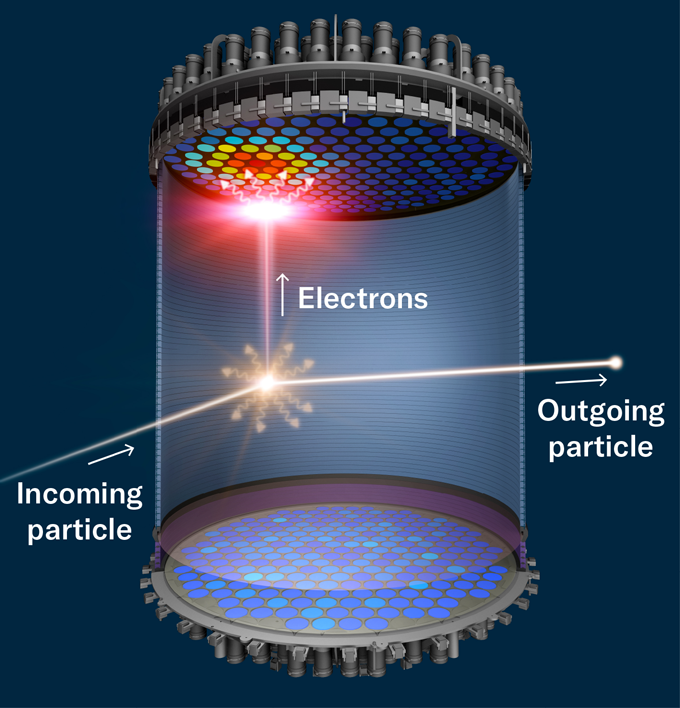
Scientists analyzing data from the LUX-ZEPLIN experiment in South Dakota’s Black Hills have detected a single particle interaction that could be the first direct evidence of dark matter. The LZ detector, composed of 10 tons of ultrapure liquid xenon located one mile underground, recorded one unusual event that matches the expected signature of a Weakly Interacting Massive Particle (WIMP), a leading theoretical candidate for dark matter.
Why it matters
Dark matter makes up approximately 85% of the universe’s mass but has never been directly detected. This potential sighting, described as a ‘compelling hint’ by researchers, could finally solve one of physics’ greatest mysteries. If confirmed, it would revolutionize our understanding of the universe’s composition and potentially open new avenues in particle physics beyond the Standard Model.
What to watch
Scientists emphasize this is just one event and more data is needed before claiming discovery. The LZ experiment will continue collecting data to verify if this interaction was indeed dark matter or another rare phenomenon. The physics community is likely to scrutinize these findings closely and potentially design follow-up experiments to confirm or refute the detection.
Sources
- sciencenews.org — LZ experiment details and scientific context
- space.com — Information about the LUX-ZEPLIN experiment and dark matter significance
How did this story land?
Choose one reaction. Choosing it again leaves it selected.