
Roman Space Telescope Launches to New Era of Cosmic Discovery
NASA's Nancy Grace Roman Space Telescope has successfully deployed in orbit, marking a major milestone in space astronomy.
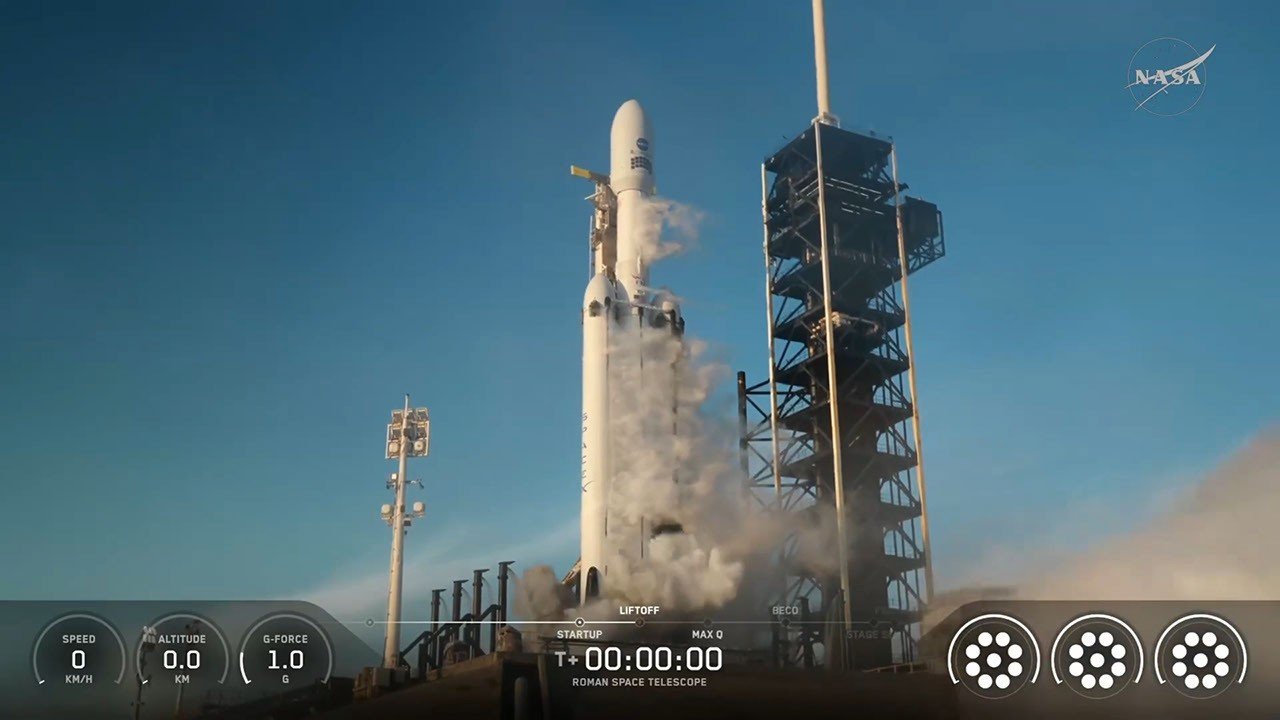
The Update
NASA’s Nancy Grace Roman Space Telescope has successfully launched and deployed into orbit. The telescope, which shares the main mirror size of the Hubble Space Telescope but can survey 100 times more sky per snapshot, separated from its SpaceX Falcon Heavy rocket shortly after liftoff. The mission is now entering a 90-day commissioning phase as it travels to a stable gravitational point in space known as L2.
Why It Matters
This launch represents a significant advancement in space-based astronomy. The Roman Space Telescope is designed to study dark energy and exoplanets with unprecedented efficiency. Its ability to capture wide-field images quickly could revolutionize our understanding of the universe’s expansion and the prevalence of planets outside our solar system.
What to Watch
During the 90-day commissioning period, engineers will test the telescope’s instruments and deploy its solar arrays. The mission will be considered fully operational once it reaches its destination at the sun-Earth Lagrange Point 2 (L2). The first scientific observations are expected to begin shortly thereafter.
Sources
- science.nasa.gov — Mission overview and technical specifications
- space.com — Deployment details and mission timeline