Water Survives Near Milky Way’s Black Hole
Astronomers detect water and dust around a star near our galaxy's supermassive black hole, challenging assumptions about stellar life in hostile environments.
The update
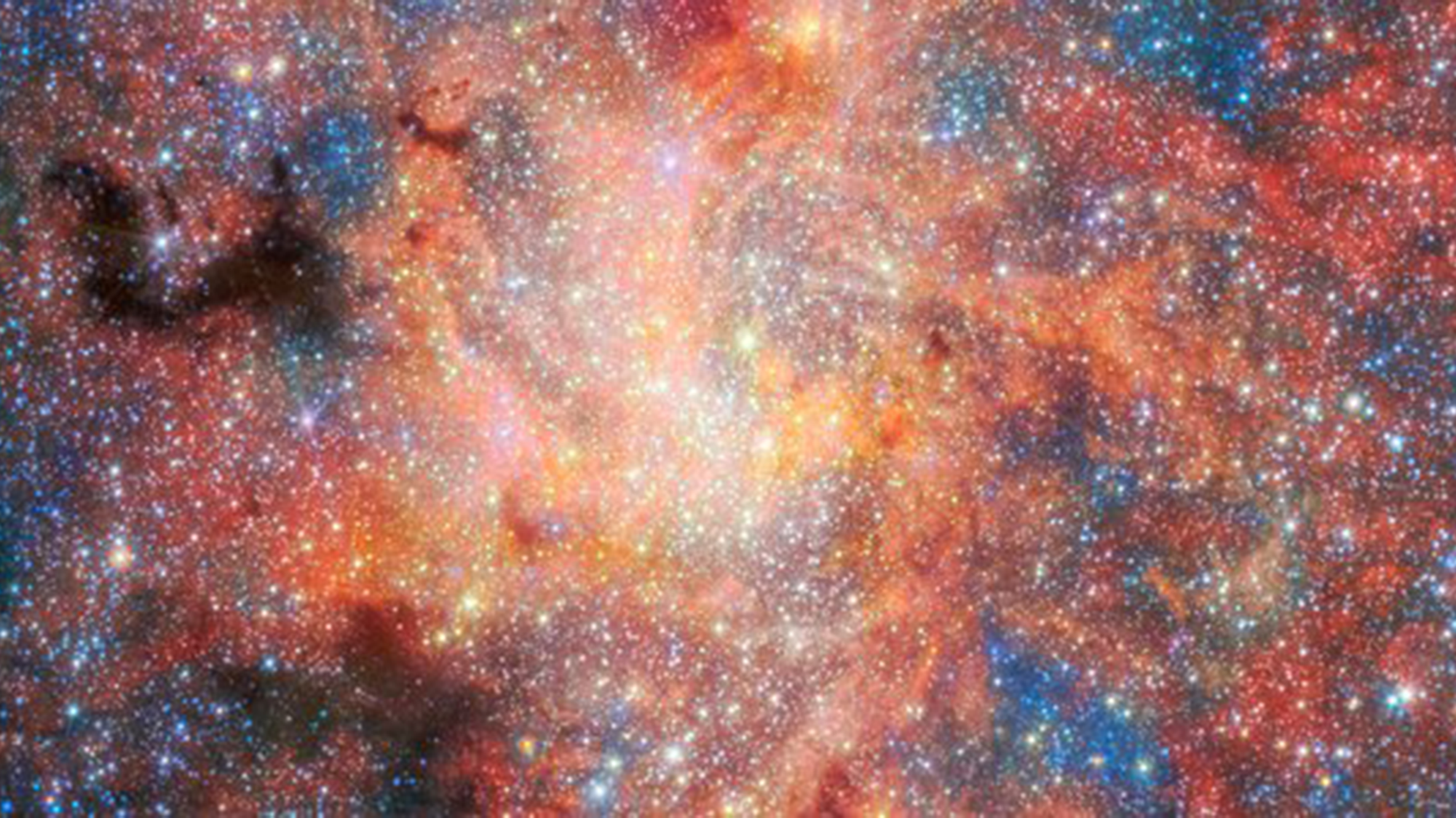
Using the James Webb Space Telescope, researchers observed an aging star near the Milky Way’s supermassive black hole, Sagittarius A*. The star, designated IRS 3, is shedding material and gas. Within this envelope, the team detected traces of water and cosmic dust. This marks the first time water has been found this close to the galactic center. The findings, published in Astronomy & Astrophysics, suggest that molecular material can survive in an environment typically considered too hostile for such processes.
Why it matters
Galactic centers are among the most extreme environments in the universe. They are defined by intense radiation and gravitational forces. This discovery challenges the assumption that these conditions prevent aging stars from enriching their surroundings with dust and water. It provides a direct view of how stellar life cycles function under such pressure, offering a new benchmark for understanding star behavior in crowded, hostile settings.
What to watch
Future observations will focus on whether this resilience extends to other stars in the immediate vicinity of Sagittarius A*. Scientists will also investigate the specific mechanisms that allow water molecules to remain stable so close to the black hole.
Sources
- livescience.com — Context on the detection of water and dust near the black hole and the publication details.
- space.com — Details on the James Webb Space Telescope (MIRI) and the specific distance of the star from Sagittarius A*.