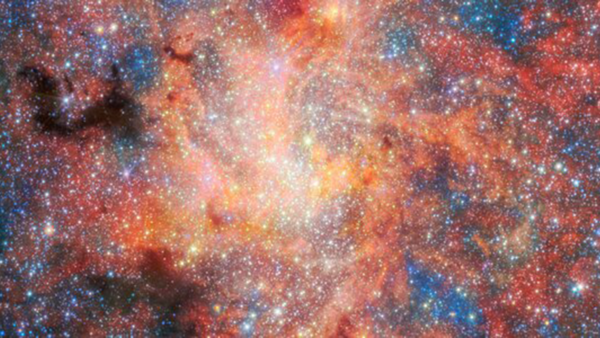
Space Isn’t Empty After All
Scientists may have found evidence that 'empty' space isn't empty at all, using a magnetar's magnetic field to detect quantum vacuum effects.
The update
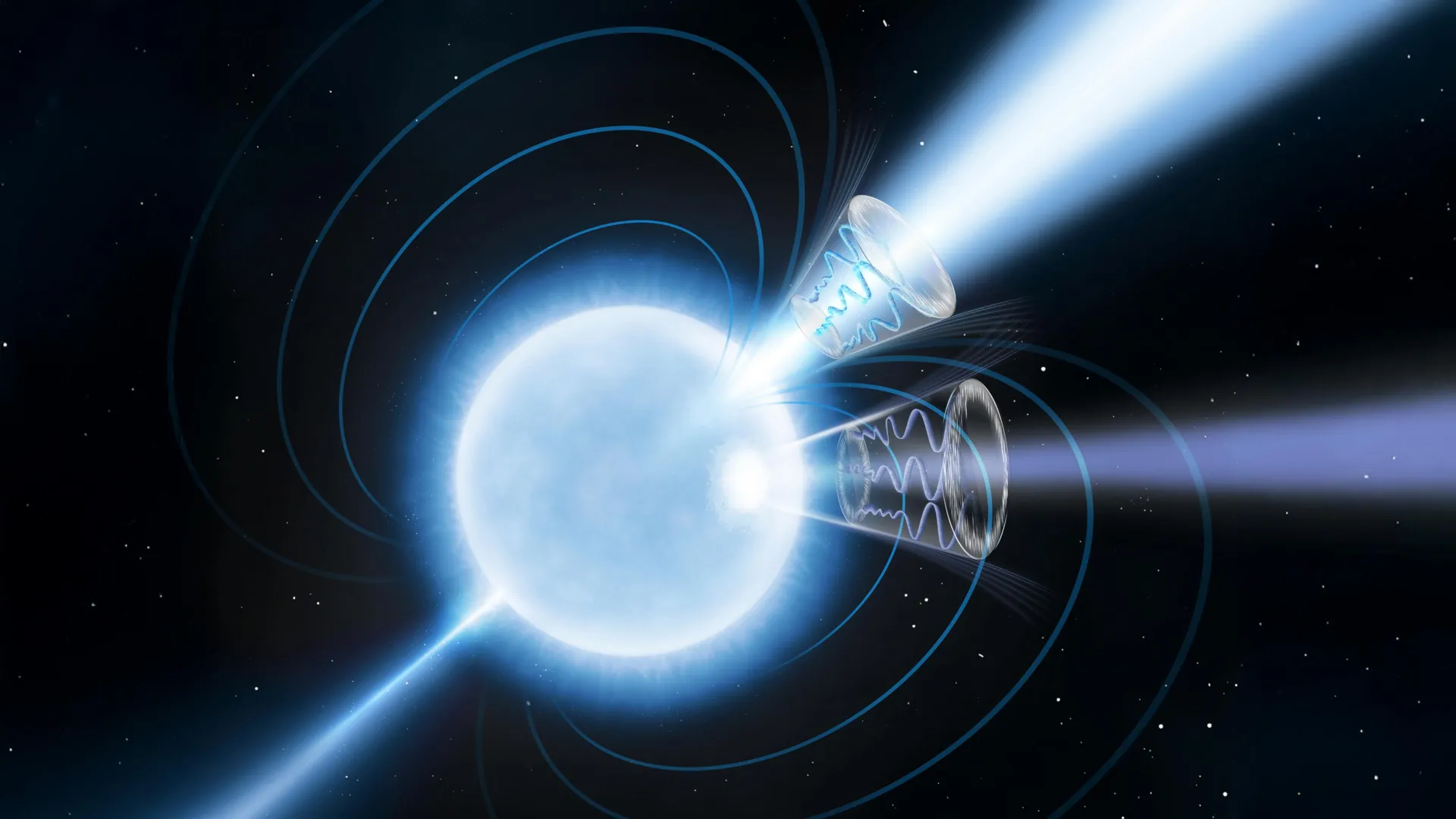
Scientists may have detected vacuum birefringence, a quantum effect predicted by Werner Heisenberg nearly 90 years ago. The phenomenon suggests that seemingly empty space can alter how light travels, acting like a prism under extreme magnetic conditions. Researchers studied a magnetar—a neutron star with an extraordinarily powerful magnetic field—using NASA’s Imaging X-ray Polarimetry Explorer and other telescopes. Their observations may represent the first direct detection of this theoretical quantum effect.
Why it matters
If confirmed, this discovery would provide the first direct evidence that vacuum isn’t truly empty but contains ‘virtual particles’ that briefly appear and disappear. It would validate a fundamental prediction of quantum mechanics and offer a new way to investigate the quantum universe. The findings could revolutionize our understanding of space’s fundamental nature and how light behaves in extreme conditions.
What to watch
The scientific community will need to verify these findings through independent research. Future observations of other magnetars and more precise measurements could confirm or challenge the results. Researchers may also explore how this quantum effect could be detected in other cosmic environments or potentially replicated in laboratory settings.
Sources
- sciencedaily.com — Details on the magnetar observations and vacuum birefringence theory
- space.com — Context on the 90-year-old quantum mystery and its significance