
Black Hole Rips Apart Star, Briefly Outshines Galaxy
A wandering supermassive black hole ripped apart a star, briefly outshining its entire galaxy in ultraviolet light.
The update
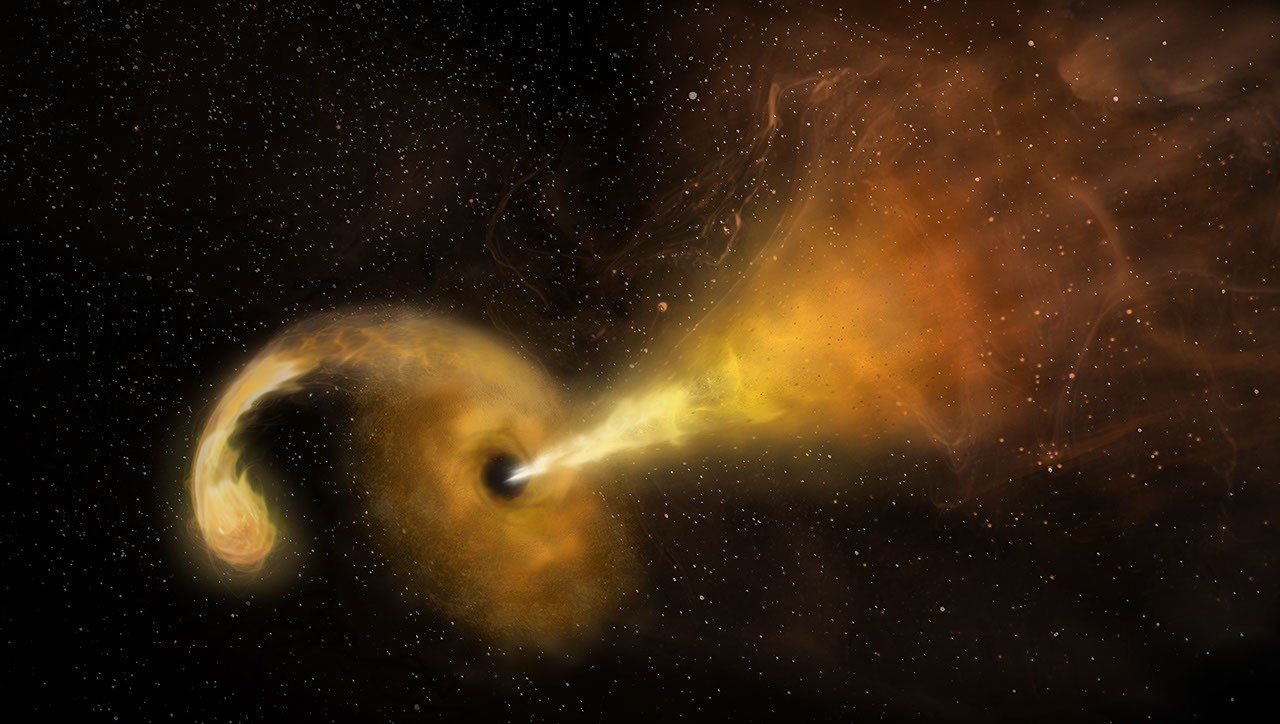
NASA’s Swift Observatory has captured a rare astronomical event: a supermassive black hole tearing apart a star about 750 million light-years from Earth. The black hole, which is roughly a million times the mass of our Sun, is not in the center of its host galaxy but rather wandering on the outskirts. This “orphan” black hole ripped the star apart, creating an ultraviolet flare that briefly outshone the entire galaxy.
Why it matters
This is the first time astronomers have confirmed a tidal disruption event occurring so far from a galaxy’s core. The discovery validates a new technique for hunting invisible supermassive black holes that have wandered away from galactic centers. It suggests that these wandering black holes may be more common than previously thought, offering a new way to study the otherwise hidden population of supermassive black holes.
What to watch
Astronomers are now using this discovery to refine their search methods. The next steps involve analyzing the data to understand how these black holes become separated from galactic cores and what happens to the debris left behind after the star is consumed.
Sources
- science.nasa.gov — Observation details, mass of black hole, location relative to galaxy core
- sciencedaily.com — Distance to Earth, AI detection by ZTF, peak brightness comparison
How did this story land?
Choose one reaction. Choosing it again leaves it selected.