
Blue Origin New Glenn Rocket Explodes on Florida Launch Pad, Threatening NASA’s Moon Timeline
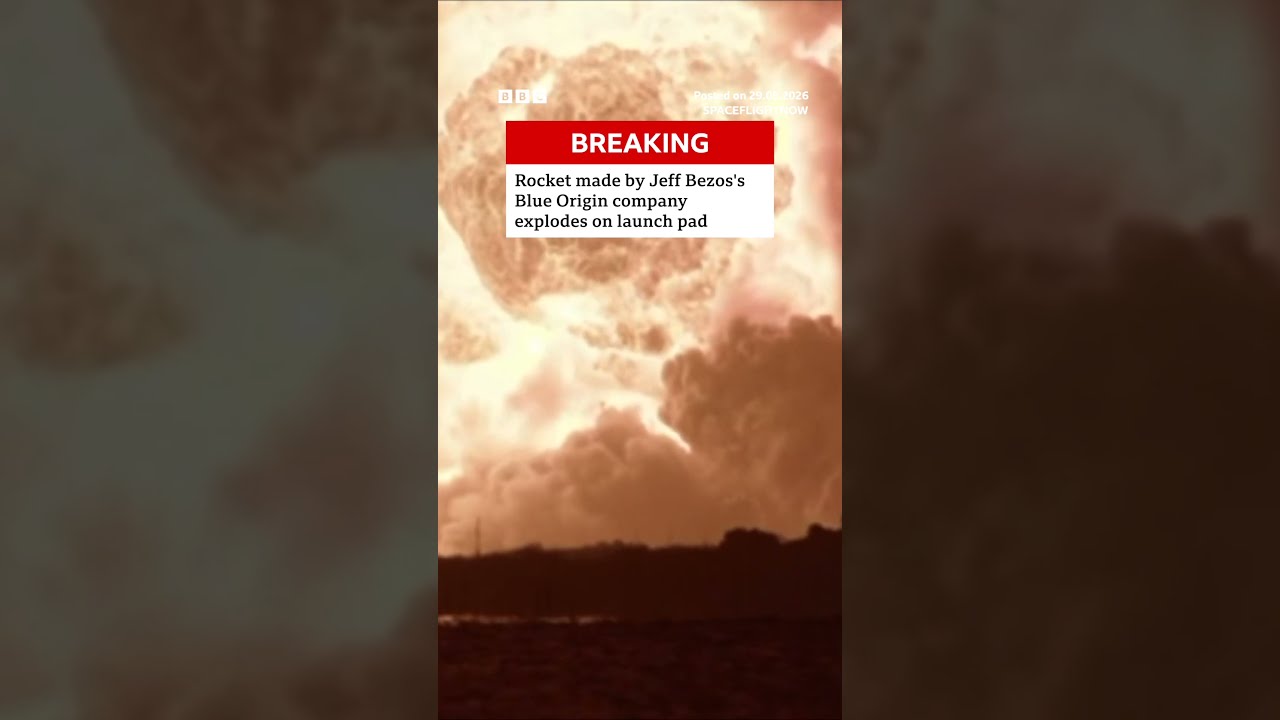
A Blue Origin New Glenn rocket exploded in a massive fireball during a routine engine test at Cape Canaveral Space Force Station on Thursday night, dealing a significant blow to Jeff Bezos’ space company and casting serious doubt over NASA’s lunar ambitions.

What Happened
The 98-meter (322-foot) New Glenn rocket exploded at approximately 21:00 local time (02:00 GMT Friday) during what Blue Origin described as a “hotfire test” of its engines. Dramatic footage captured the moment the rocket burst into a massive ball of fire that engulfed Space Launch Complex 36 (LC-36), with one of the pad’s lightning protection towers seen toppling in the aftermath.
“All personnel are accounted for and safe,” Bezos wrote on X following the incident. “Very rough day, but we’ll rebuild whatever needs rebuilding and get back to flying. It’s worth it.”
The U.S. Space Force confirmed that emergency responders were on the scene and officials are working with Blue Origin to evaluate available data and determine the exact cause of the anomaly. Brevard County Emergency Management stated there is no threat to the public.
NASA’s Moon Plans in Jeopardy
The explosion’s timing could not be worse for NASA. Just days ago, NASA Administrator Jared Isaacman announced the first three missions of the agency’s ambitious plan to build a permanent lunar base at the Moon’s south pole. The first mission, Moon Base 1, was set to fly on Blue Origin’s robotic Blue Moon Mark 1 lander — which was supposed to ride to the Moon atop a New Glenn rocket.
“Spaceflight is unforgiving, and developing new heavy-lift launch capability is extraordinarily difficult,” Isaacman said on X. “We will work with our partners to support a thorough investigation of this anomaly, assess near-term mission impacts, and get back to launching rockets.”
LC-36 is the only facility in the world built to launch the New Glenn. Analysts expect it will take months — not weeks — to rebuild and re-certify the launch pad, grounding Blue Origin’s largest rocket for an extended period.
NASA had also recently awarded Blue Origin a contract worth up to $468 million to deliver two commercial lunar terrain vehicles to the Moon’s south pole by 2028. With New Glenn grounded, the entire timeline for crewed lunar landings — already targeted for 2028 — now faces inevitable delays.
Amazon’s Satellite Race Hit Hard
Beyond NASA, the explosion is a major setback for Amazon’s Project Kuiper broadband constellation, which relies on Blue Origin to launch its satellites. The destroyed rocket had been scheduled to deploy 48 satellites as early as June 4.
Under its FCC license, Amazon must have half of its 3,236-satellite constellation — approximately 1,618 satellites — in orbit by July 30, 2026. As of late May, the company was already more than 1,300 satellites short of that target, with only about 300 satellites successfully launched — all by competitors including SpaceX, not Blue Origin.
Elon Musk, SpaceX CEO, responded to footage of the blast with characteristic brevity: “Most unfortunate. Rockets are hard.”
Pattern of Setbacks
This is the second major incident involving Blue Origin’s New Glenn in recent months. Just last month, the FAA ordered an investigation after a New Glenn rocket failed to place an AST SpaceMobile satellite into its intended orbit. The company had previously celebrated a successful New Glenn launch and booster landing in November 2025.
Meanwhile, China is pushing ahead with its own plans to land astronauts on the Moon by 2030, leaving NASA with diminishing room for delays in the new space race.
Key Takeaways
- Blue Origin’s New Glenn rocket exploded during a hotfire test at Cape Canaveral; no injuries reported
- The sole launch pad for New Glenn, LC-36, sustained extensive damage and could take months to repair
- NASA’s Moon Base 1 mission, planned for autumn 2026, relied on the New Glenn rocket
- Amazon’s Project Kuiper satellite constellation is now more than 1,300 satellites behind its FCC deadline
- Investigation into the root cause is underway with U.S. Space Force and FAA involvement
What to Watch
The immediate focus will be on the investigation’s findings and the extent of damage to LC-36. Investors and space industry analysts will be watching closely for any revised timelines from NASA regarding the Artemis program and Moon base missions. Amazon may need to seek another extension from the FCC for its satellite deployment deadline.