Russia Signs Historic Military Pact with Taliban — First Nation to Formally Arm Afghanistan’s Islamist Regime
A Stunning Role Reversal
Nearly four decades after the Soviet Union limped out of Afghanistan in defeat — driven out by the same mujahideen fighters whose descendants now rule Kabul — Russia has returned. But this time, it is the Taliban regime that is actively welcoming Moscow back into the country.
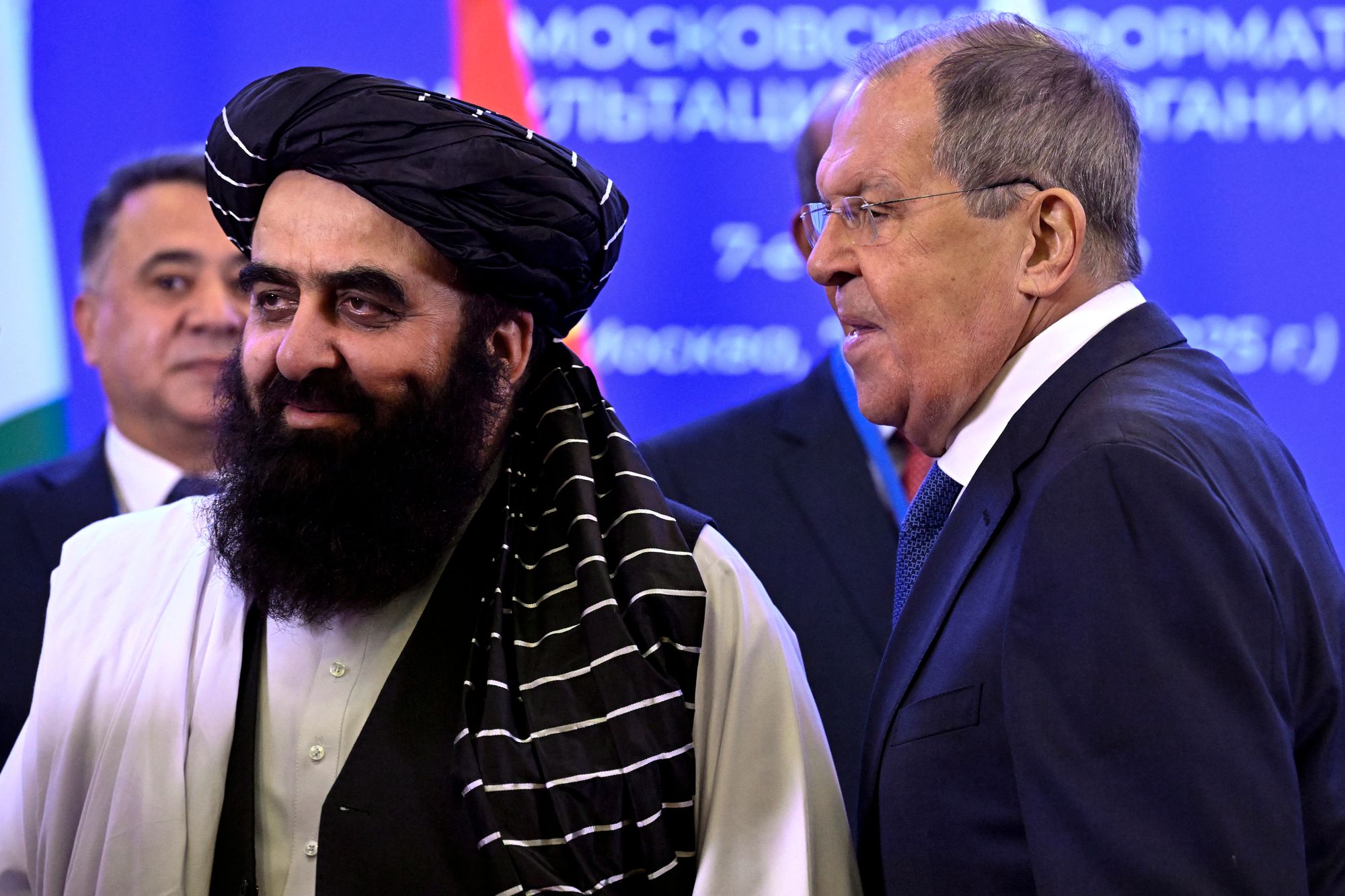
On May 27, 2026, Sergei Shoigu, secretary of Russia’s Security Council and former defense minister, signed a military-technical cooperation agreement with Taliban Defence Minister Mullah Mohammad Yaqub on the sidelines of the Moscow International Security Forum. The deal marks the first military pact between a major power and the Islamist group since it retook Afghanistan in 2021.
The signing ceremony, attended by Taliban Deputy Prime Minister Abdul Ghani Baradar, cemented Moscow’s position as the only nation to formally recognize the Taliban as Afghanistan’s legitimate government — a status it granted in July 2025, drawing sharp condemnation from Western capitals and human rights organizations.
What Does the Deal Cover?
Neither Russia nor the Taliban has released the text of the agreement or offered specifics about its scope. Military-technical cooperation agreements can encompass a wide range of activities: arms sales, joint training, equipment maintenance, logistics support, intelligence sharing, or technical assistance.
“In the absence of any publicly disclosed information about the terms and conditions of this military cooperation agreement, it is difficult to gauge whether the deal represents a significant historical shift or is merely political signaling by the Kremlin to the West,” said Aleksei Zakhrov, a fellow at the New Delhi-based Observer Research Foundation.
Speaking at the forum, Yaqub — the son of Taliban founder Mullah Mohammad Omar — said the group views cooperation with Moscow as carrying “important meaning” and that both sides intend to “move further” in bilateral relations.
The North Korea Parallel
The agreement has immediately drawn comparisons to Russia’s 2024 mutual defense pact with North Korea. That deal, which included a NATO Article 5-style clause, was followed by thousands of North Korean soldiers deploying to Russia’s Kursk region, where they suffered more than 6,000 casualties fighting Ukrainian forces, according to Western intelligence.
The question now being asked in Kyiv, Washington, and European capitals: could battle-hardened Taliban fighters be next?
Experts caution against such conclusions. “Russia cannot expect any significant help from the Taliban, in terms of weapons or troops,” Zakhrov told The Independent. He noted fundamental differences: North Korea received advanced missile technology in exchange for its deployment, whereas Moscow is unlikely to share such sensitive capabilities with the Taliban.
Financial Realities Limit the Pact
“Russia is too economically stretched to provide free military aid to the Taliban government,” said Hameed Hakimi, nonresident senior fellow at the Atlantic Council. “Meanwhile, the Taliban government does not have deep coffers to purchase such a quantity of military equipment, which would make it a consequential military trading partner in Moscow’s eyes.”
The Taliban regime is struggling with rising instability in Afghanistan’s northern provinces and an active conflict along its southern border with Pakistan. What Kabul likely seeks is help with equipment repair and maintenance — especially for the billions of dollars of U.S.-supplied weapons abandoned during the chaotic 2021 withdrawal — rather than a full-scale arms pipeline.
The IS-K Factor
Moscow’s primary motivation, analysts say, is counterterrorism. Just one day before the signing, Aleksandr Bortnikov, head of Russia’s Federal Security Service (FSB), warned that Islamic State Khorasan (IS-K) “is now actively recruiting from among citizens of Tajikistan, Uzbekistan, Kyrgyzstan, Kazakhstan, as well as labor migrants in Russia.”
IS-K claimed responsibility for the March 2024 assault on Moscow’s Crocus City Hall that killed nearly 150 people — the deadliest attack in Russia in two decades. Moscow views the Taliban as a necessary, if uncomfortable, partner in containing that threat in its Central Asian backyard.
Notably, the two sides already disagree on the threat assessment. Taliban chief spokesperson Zabiullah Mujahid claimed this week that “ISIS has been completely eliminated in Afghanistan” — an assertion that contradicts both Russian intelligence assessments and Western reporting indicating IS-K remains highly active.
Geopolitical Chess
The agreement extends beyond counterterrorism. Shoigu used the forum to denounce Western sanctions, calling on Western countries to “unfreeze blocked Afghan assets” and “fully recognize the full extent of responsibility for their 20-year presence in Afghanistan.”
“We consider unacceptable — both for us and for our Afghan friends — the return of military structures or facilities of the United States and NATO to Afghanistan or neighboring states under any pretext,” Shoigu declared.
For the Kremlin, the deal fits squarely within its broader strategy of constructing an anti-Western alliance spanning Asia — one that already includes China, Iran, and North Korea. A military agreement with the Taliban, however limited in practical scope, allows Russia to draw Kabul further from the Western orbit.
For the Taliban, the benefits are equally clear: Russia offers diplomatic legitimacy that no Western nation has been willing to extend. “The symbolism of the agreement with Russia will allow the Taliban to claim external legitimacy and create a PR moment to influence public opinion domestically,” Hakimi told RFE/RL.
What Happens Next
The pact is likely to escalate already high tensions between Moscow and the West at a moment when the US-led war against Iran enters its 92nd day and the Ukraine conflict shows no sign of resolution. Western officials have yet to formally respond, but early signals from NATO capitals suggest deep unease.
Whether the deal translates into tangible military cooperation — or remains a symbolic gesture of defiance against the US-led international order — will depend on the still-secret text of the agreement. What is already certain: the geopolitical map of Central Asia has shifted, and Russia has placed its flag firmly on the side of a regime the rest of the world refuses to recognize.
This is a developing story. The Briefly Pulse will continue monitoring for updates on the terms of the agreement and international reactions.